Academic, Professional, Technical, Trade, Research Books & Journals
americanpress@flash.net • 617-247-0022 • 75 State Street #100 • Boston, MA 02109
JOGGING:
A Successful Guide to Aerobicsby DALE E. CAMPBELL
3rd edition, 140 pages, $13.95
ISBN 978-0-89641-461-7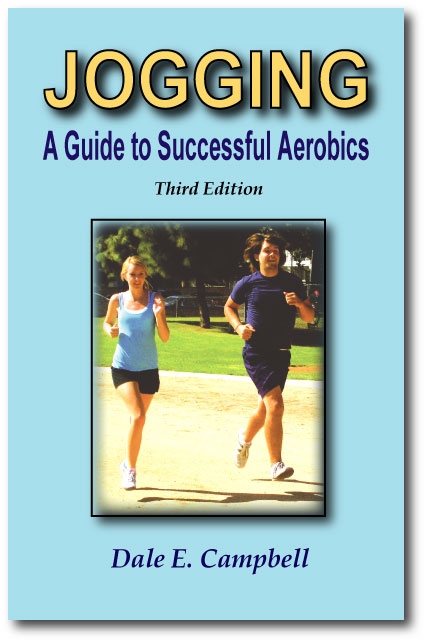
This text is designed for use in beginning jogging programs. It provides the novice with a step-by-step approach to starting and maintaining a successful aerobics program. Based on proven scientific principles for effective aerobic exercising, this book includes specific details on assessment of cardiovascular fitness. Key points are emphasized with photographs and illustrations. The book includes unit reviews for each chapter. A test bank is available to instructors adopting Jogging: A Successful Guide to Aerobics.
CONTENTS
Chapter 1: LIFESTYLE—THE KEY TO OPTIMAL WELL-BEING
Avoiding Destructive Habits
Weight Control
Diet
Stress Management
OsteoporosisChapter 2: ASSESSMENT OF GENERAL CARDIOVASCULAR FITNESS
Run—Walk MethodChapter 3: KEEPING RECORDS
Explanation of the Breakdown of Daily Record KeepingChapter 4: TRAINING GUIDE FOR A SUCCESSFUL AEROBICS PROGRAM
Frequency
Intensity
Duration
Level One
Level Two
Level Three
Level Four
Level FiveChapter 5: TRAINING SESSION—PREPARATION PHASE
Ballistic Stretch
Static StretchChapter 6: TRAINING SESSION—RECOVERY PHASE
Chapter 7: NUTRITION AS REALTED TO AEROBICS
Carbohydrates
Fats
ProteinChapter 8: PHYSIOLOGICAL BASIS FOR CARDIOVASCULAR FITNESS
Effects of Physical Training upon the Heart and Circulatory System
Heart Size
Heart Rate
Stroke Volume
Blood Volume and Hemoglobin
Changes in Cholesterol and Triglyceride Levels
Effects of Physical Training upon the Respiratory System
Pulmonary Ventilation
Ventilatory Efficiency
Maximal Oxygen Uptake
Diffusion Capacity
Effects of Physical Training Upon the Body
Changes in Body Composition
Heat AcclimatizationChapter 9: PSYCHOLOGICAL AND SOCIOLOGICAL ASPECTS OF CARDIOVASCULAR TRAINING
Chapter 10: MECHANICS OF JOGGING
Posture
Foot Plant
Stride
Use of Arms
Breathing
Overall ActionChapter 11: ENVIRONMENTAL CONDITIONS
Training in the Heat
Training in the Cold
Air Pollution
Training at High Altitudes
Terrain
Things Research does not tell you about Jogging
UV Rays: The Basic FactsChapter 12: INJURY PREVENTION AND CARE
Overuse Injuries
Minor Injuries
Treatment of InjuriesChapter 13: CROSS TRAINING
Benefits of Cross Training
Examples of Cross TrainingAPPENDIX A: CHAPTER REVIEWS
BIBLIOGRAPHY
INDEX
ABOUT THE AUTHOR
Dale E. Campbell is currently teaching in the Department of Physical Education at Fresno College in Fresno, California. Previously, he was Chairman of the Department of Physical Education at Houghton College in Houghton, New York. He received his B.S. and M.Ed. from the University of Nevada at Las Vegas and his D.A. from Middle Tennessee State University. Dr. Campbell's background includes 12 years of teaching experience, 14 years of coaching experience, and 12 years of experience with activity courses in Physical Education. Dr. Campbell also has enjoyed over 20 years of competitive and leisure running.